Start a new cart?
Your cart already contain items from Others
Would you like to clear the cart?
Your cart already contain items from Others
Would you like to clear the cart?
 Startup Growth & Scaling
India’s business landscape is evolving rapidly. Digital adoption is accelerating. AI tools are becoming affordable. Consumers are comfortable buying online. Tier 2 and Tier 3 cities are becoming strong startup hubs. For anyone exploring entrepreneurship in India, 2026 offers powerful low-investment opportunities with scalable potential. In this guide, we explore 20 practical business ideas, their real-world application, benefits, challenges, and actionable steps to help you start smart. This article is designed for small business owners, startup founders, marketing managers, and decision-makers who want clarity without technical complexity. Why Low-Investment Businesses Make Sense in 2026 Starting small reduces risk. Low overhead allows you to test ideas quickly. Digital tools reduce manpower and marketing costs. India’s young population and internet penetration create demand in almost every sector. Today, you don’t need a large office or heavy capital.You need: A clear niche Smart execution Digital presence Community support Platforms like @digitalstartupindia and www.digitalstartupindia.com help entrepreneurs connect, showcase their ideas, and learn practical business skills. Now let’s explore the opportunities. Top 20 Profitable Business Ideas in India (2026) 1. AI-Powered Digital Marketing Agency Businesses need visibility online. You can start a niche digital marketing agency focusing on: Social media management Performance ads Local SEO AI-powered content creation Low investment: Laptop + internet + skillsetHigh return: Retainer-based clients 2. Online Skill-Based Coaching If you have expertise in: Finance Marketing Coding Spoken English AI tools You can start online coaching through Zoom or recorded courses. India’s demand for practical skills is massive. 3. E-commerce Reselling Business You can sell products through: Instagram WhatsApp Business Marketplaces No need for inventory if you use dropshipping models. Focus on trending niches like: Home décor Fitness products Organic Products 4. Regional Language Content Creation Tier 2 and Tier 3 cities prefer content in local languages. Start: YouTube channel Instagram reels Business profile Monetize through ads, brand deals, and digital products. 5. Freelance Business Consulting Many small businesses struggle with: Pricing Branding Operations Sales systems If you understand business fundamentals, you can provide consulting services online. 6. Home-Based Cloud Kitchen Food delivery continues to grow. Start small from home: Regional cuisine Healthy meals Office lunch subscription List on delivery platforms or market locally. 7. Digital Product Selling Create once. Sell repeatedly. Examples: Business templates Financial planning sheets Marketing calendars AI prompts library Low cost, high margin. 8. YouTube Automation Channel Educational or explainer content works well. Focus on: Business education Tech news Startup insights Outsource editing and scripting to scale faster. 9. Mobile Repair & Tech Services Smartphone usage is huge in India. Low setup cost.High repeat customers. Add doorstep service for extra revenue. 10. Social Media Management for Local Businesses Small shops and clinics want online presence but lack skills. Offer: Profile setup Content posting Basic advertising Monthly recurring income model works well. 11. Personal Branding Agency Entrepreneurs and professionals want to build LinkedIn presence. Offer: Profile optimization Content writing Thought leadership strategy Strong demand in 2026. 12. EV Charging Station Business With electric vehicles growing, charging infrastructure is needed. Requires moderate investment but offers long-term stability. 13. Subscription-Based Business Model Examples: Monthly snack boxes Digital learning membership Startup resource community Predictable income stream. 14. Influencer Management Agency Micro-influencers are growing fast. Brands need help connecting with them. You can act as a bridge and earn commission. 15. Website & Landing Page Design Services Many businesses still lack professional websites. Learn no-code tools like: WordPress Webflow Shopify Offer affordable packages for SMEs. 16. Digital Accounting & GST Services Small business owners struggle with compliance. Offer remote bookkeeping and GST filing. Stable, recurring revenue. 17. Short-Form Video Editing Agency Reels and shorts dominate social media. Offer: Editing packages Script-to-video services Branding overlays High demand from founders. 18. Online Community Building Platform Create niche communities: Women entrepreneurs College startups Local business networks Monetize through events, memberships, sponsorships. 19. Health & Fitness Coaching Online People prefer online trainers. Offer: Customized diet plans Live sessions Subscription model 20. AI Tool Implementation Services Many businesses hear about AI but don’t know how to use it. You can help them: Automate customer service Use AI for marketing Build simple chatbots This is one of the fastest-growing sectors. Benefits of Starting a Low-Investment Business 1. Lower Financial Risk You don’t need large capital. 2. Faster Testing You can test ideas quickly and pivot if needed. 3. Flexible Operations Work from home or remote. 4. Scalable Model Digital businesses scale faster than traditional ones. Common Challenges & How to Overcome Them 1. Lack of Clarity Many founders start without proper research. Solution:Validate demand before investing time and money. 2. Inconsistent Marketing Most businesses fail because they stop marketing. Solution:Create weekly content plans. Stay visible. 3. No Community Support Entrepreneurship can feel isolating. Solution:Join a business growth platform where you can: Showcase your business Share ideas Get feedback Find partnerships Communities like @digitalstartupindia allow founders to connect with other business-minded entrepreneurs and decision-makers. Practical Steps to Start in 2026 Follow this simple roadmap: Step 1: Identify a Skill or Market Gap Look around your local market or online demand. Step 2: Validate the Idea Talk to 10 potential customers. Ask about their pain points. Step 3: Start Small Offer a basic version of your service. Step 4: Build Digital Presence Create: LinkedIn profile Instagram page Simple website You can also showcase your business and share ideas at www.digitalstartupindia.com to increase visibility among entrepreneurs. Step 5: Improve Based on Feedback Adapt quickly. Improve pricing, packaging, and delivery. Empowering India’s Entrepreneurs Through AI-Driven Education and Innovation. Best Practices for Sustainable Growth 1. Focus on Problem-Solving Don’t sell products. Solve problems. 2. Build Personal Brand People trust faces more than logos. 3. Use AI Tools Smartly Automate repetitive tasks. 4. Network Consistently Engage with entrepreneurs weekly. 5. Post Valuable Content To stay visible and build authority: Share insights regularly Ask engaging questions Publish short authentic videos Share PPTs and PDFs Re-share @mentions Tag relevant professionals Review analytics monthly Consistency builds credibility. How Businesses Can Overcome These Challenges Here’s a practical step-by-step approach: Step 1: Build AI Awareness Leaders should attend workshops or online business training focused on AI basics. Step 2: Start Small Begin with: Marketing automation Customer analytics Chatbots Test results before scaling. Step 3: Partner Strategically Collaborate with: AI-trained graduates AI consulting firms Startup networks Step 4: Join Business Learning Platforms Communities like Digital Startup India provide structured exposure to digital tools, AI use cases, and startup guidance in India. You can explore resources and community initiatives at: www.digitalstartupindia.com Follow: @digitalstartupindia Such ecosystems help bridge the gap between education and execution. Practical Application for Business Owners If you already run a business, you can: Add a digital revenue stream Launch an online product Offer consulting services Start content marketing Diversification reduces risk and increases income. Entrepreneurship in India is no longer limited to metros. With digital access, even small-town founders can build national brands. Summary & Key Takeaways 2026 is a strong opportunity year for smart entrepreneurs. You don’t need heavy funding.You need: Clear positioning Digital presence Consistent marketing Community support Low-investment businesses like digital services, coaching, AI consulting, and content creation offer high return potential. Start small. Stay consistent. Build visibility. And most importantly, stay connected to a strong entrepreneurial ecosystem like @digitalstartupindia to learn, grow, and collaborate. Explore more insights and showcase your business at: www.digitalstartupindia.com
Read More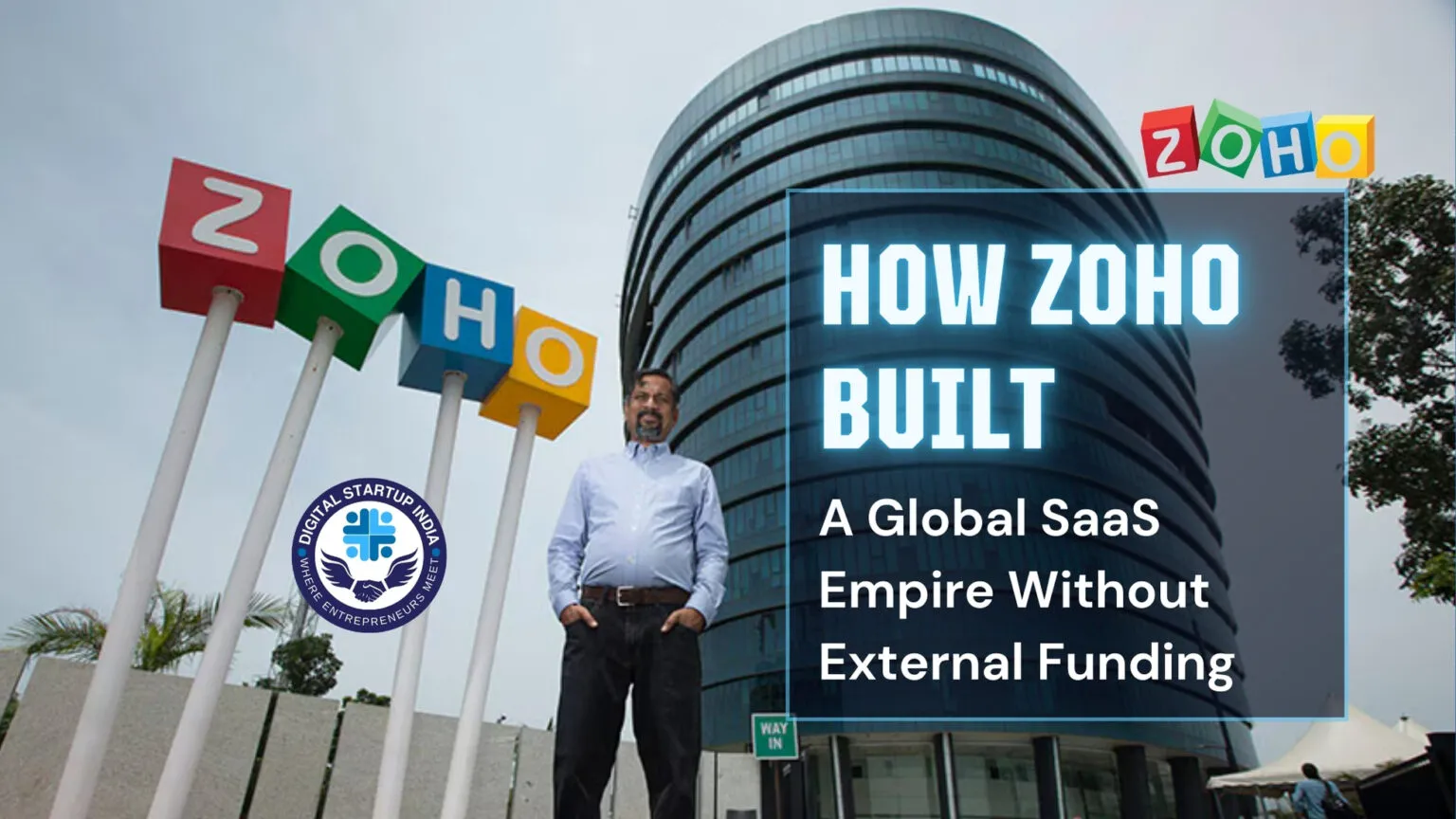 Startup Growth & Scaling
In an era dominated by venture-backed unicorns and aggressive burn rates, Zoho global SaaS empire stands apart. The company represents one of the most compelling case studies in modern enterprise software India has produced — not because it raised billions, but because it chose not to. The Zoho bootstrapped growth story challenges prevailing startup orthodoxy. While much of the SaaS ecosystem relies on venture capital for expansion, Zoho built a multi-billion-dollar global presence as a SaaS company without venture capital. The firm expanded into over 180 countries, developed 50+ integrated products, and remained privately owned. This article offers a deep Zoho business model analysis, examining how it scaled sustainably, maintained profitability, and executed a disciplined long term SaaS strategy — all from India. The Context: India’s Startup Model vs Zoho’s Divergence India’s startup ecosystem has historically followed a predictable trajectory: Raise seed capital Burn capital for customer acquisition Scale rapidly Raise larger rounds Target exit or IPO This venture-driven structure shaped how most technology companies operate in India. Growth is often prioritized over profitability. Valuation becomes a headline metric. Zoho rejected this template. Instead, it positioned itself as a bootstrapped SaaS company India produced quietly, focusing on product depth, revenue discipline, and global expansion funded purely through internal cash flows. This divergence is not accidental. It is philosophical. The Origin: From AdventNet to Zoho Zoho began as AdventNet in 1996, focusing on network management software. It operated in the enterprise infrastructure segment, serving telecom and IT clients globally. The transformation into Zoho occurred in the mid-2000s, when the company shifted toward web-based productivity tools and CRM software. Unlike Silicon Valley startups that scaled through investor capital, Zoho reinvested its enterprise revenues into building cloud products. This reinvestment cycle became the foundation of sustainable SaaS scaling. Why Zoho Refused External Funding The question frequently asked: Why did Zoho avoid venture capital? Several structural reasons explain this decision. 1. Control Over Product Vision External investors often push for accelerated timelines, exits, or pivots. By remaining independent, Zoho maintained product continuity. 2. Profitability Discipline Without external funding, operational expenses had to align with revenue growth. This forced: Lean hiring Efficient engineering Realistic pricing 3. Long-Term Orientation A long term SaaS strategy requires patience. Venture-backed companies typically operate within 7–10 year liquidity cycles. Zoho optimized for decades, not quarters. Zoho Business Model Analysis: The Engine of Independence Understanding the Zoho revenue model is essential to understanding its independence. 1. Subscription-Based Recurring Revenue Zoho adopted a recurring SaaS pricing structure early. Monthly and annual subscriptions created predictable cash flows. This predictability enabled reinvestment without dilution. 2. Product Ecosystem Strategy Instead of building one flagship product, Zoho built an integrated suite: CRM Finance tools HR software Marketing automation Collaboration platforms This ecosystem created high switching costs. Customers adopting one product often expanded into multiple modules. This is a textbook example of product-led growth Zoho executed internally. Entrepreneurs and startup founders connecting through the digital startup india community Product-Led Growth Zoho Model Unlike sales-heavy SaaS firms, Zoho leaned heavily into product usability and affordability. The product-led model included: Free tiers Transparent pricing Seamless onboarding Minimal sales dependency This reduced customer acquisition cost (CAC). In contrast, many Zoho vs VC funded startups comparisons reveal high marketing burn in venture-backed firms. Zoho chose engineering depth over marketing aggression. International Expansion Without Capital Raises The Zoho international expansion strategy followed a disciplined blueprint. Phase 1: US Market Entry Zoho initially targeted the US SME segment with affordable CRM tools. Rather than opening expensive headquarters, it maintained operational leverage from India. Phase 2: Global Localization Zoho invested in: Multilingual interfaces Local data centers Compliance adaptation This expanded its footprint into Europe, Asia-Pacific, and Latin America. Phase 3: Data Sovereignty Strategy As data regulations tightened globally, Zoho built regional data centers. This increased trust among enterprise clients. The international expansion was incremental, funded entirely through internal profits. Comparing Zoho vs VC Funded Startups Parameter Zoho Typical VC Startup Funding Bootstrapped Multiple funding rounds Profitability Consistent Often delayed Growth Rate Steady Hyper-growth Exit Pressure None High Decision Autonomy High Shared with investors Burn Rate Low High This comparison highlights how Zoho without external funding allowed operational autonomy. Enterprise Software India: Zoho’s Domestic Impact India’s enterprise software landscape has evolved significantly. Historically, Indian IT focused on services rather than products. Zoho shifted that narrative. It demonstrated that enterprise software India could compete globally without venture capital backing. It also invested in rural talent development programs, establishing offices outside major metros. This decentralization strategy reduced operational costs and strengthened talent retention. Sustainable SaaS Scaling: Financial Discipline The core of Zoho’s success lies in financial conservatism. Key financial principles: Avoid unnecessary overhead. Invest heavily in R&D. Keep marketing spend proportionate to revenue. Focus on long-term customer retention. This discipline produced a resilient SaaS profitability model. Even during global downturns, Zoho maintained stability. The Founder-Led SaaS Growth Advantage A defining feature of Zoho is founder-led SaaS growth. Founder control created: Strategic consistency Product continuity Cultural cohesion In VC-backed companies, leadership changes are common post-Series B or IPO. Zoho’s stability reduced internal volatility. India’s Broader Startup Lessons Zoho’s journey provides structural insights for the Indian ecosystem: Lesson 1: Profitability Is a Strategy India’s startup ecosystem often glorifies valuation milestones. Zoho demonstrates that profitability is not a limitation — it is a strategic advantage. Lesson 2: Engineering Over Marketing Deep product development builds durable value. Lesson 3: Global Markets Are Accessible From India Digital distribution eliminates geographic constraints. Real Impact: From Local to Global Zoho’s impact extends beyond itself. It inspired: Regional product companies Tier-2 city SaaS founders Engineers considering product entrepreneurship India’s SaaS landscape now includes multiple profitable mid-sized firms following similar models. Government Data and India’s SaaS Rise India’s SaaS market is projected to cross tens of billions in revenue within this decade. Government policy supports digital exports, cloud infrastructure growth, and startup incentives. However, Zoho’s success shows that policy support is complementary — not foundational — when core product economics are strong. The Future of Zoho Global SaaS Empire Looking ahead, several factors will influence Zoho’s trajectory: 1. AI Integration Enterprise software globally is integrating artificial intelligence into core workflows. Zoho’s R&D investment positions it competitively. 2. Data Sovereignty Geopolitical shifts require localized infrastructure. Zoho’s distributed data center strategy provides resilience. 3. Talent Development in India By investing in internal training programs, Zoho reduces hiring dependency on elite institutions. Actionable Guidance for Students and Professionals Zoho’s model offers practical lessons. For Students Develop deep technical expertise. Learn product thinking. Study SaaS economics. Focus on long-term skill compounding. For Professionals Build domain knowledge in enterprise software India. Understand recurring revenue mechanics. Evaluate companies based on profitability, not hype. Consider joining sustainable firms over speculative ventures. For Entrepreneurs Validate product-market fit before scaling. Keep burn rates aligned with revenue. Build modular product ecosystems. Think global from day one. The Long Term SaaS Strategy Blueprint Zoho’s enduring success can be distilled into a framework: Start with niche enterprise pain points. Build integrated product layers. Maintain low CAC through product quality. Reinvest profits into R&D. Expand globally with compliance sensitivity. This blueprint contrasts sharply with rapid hyper-scaling models. Conclusion: The Structural Significance of Zoho Without External Funding The Zoho global SaaS empire is not simply a bootstrapped success story. It represents a counter-model to venture-dominated startup narratives. Through disciplined reinvestment, integrated product ecosystems, and founder-led governance, Zoho built a globally competitive SaaS company from India. The Zoho bootstrapped growth story underscores that a SaaS company without venture capital can achieve scale, profitability, and longevity simultaneously. As India continues to mature as a product nation, Zoho’s model offers a blueprint for sustainable SaaS scaling, grounded in financial realism rather than speculative growth. The larger lesson is clear: independence is not a constraint. It can be a strategic advantage.
Read More AI Tools & Technology
Top AI Trends That Will Change Business Forever Artificial intelligence is no longer an experimental technology discussed only in innovation labs. In 2026, it will become the backbone of global economic transformation. From India’s rapidly digitizing startup ecosystem to multinational enterprises, AI trends 2026 are redefining how businesses operate, compete, and grow. The future of AI in business is not incremental. It is exponential. Companies that adapt are scaling faster, reducing operational costs, and unlocking entirely new revenue streams. Those that hesitate risk becoming obsolete. This in-depth analysis explores the Top AI trends in 2026, combining historical context, Indian market insights, real-life business stories, and forward-looking strategy. Whether you are a student, entrepreneur, policymaker, or corporate professional, this guide will help you understand how artificial intelligence trends 2026 are permanently altering the business landscape The Evolution of AI: From Automation to Intelligence Economy To understand emerging AI technologies 2026, we must first examine how we arrived here. Between 2010 and 2018, AI adoption was largely experimental. Enterprises tested machine learning for analytics and customer segmentation. Startups experimented with chatbots and predictive tools. Between 2019 and 2023, AI innovation accelerated. Generative AI models entered mainstream usage. Automation became affordable. Cloud infrastructure democratized access. Post-2024, AI shifted from assistance to autonomy. Businesses began relying on AI systems for strategic decision-making, not just data processing. By 2026, AI in business transformation is no longer optional. It is foundational infrastructure—just like electricity or the internet. India, with its massive digital adoption and startup ecosystem, has become one of the fastest-growing AI markets globally. 1. Generative AI Becomes a Business Engine, Not Just a Tool From Content Creation to Strategic Execution Generative AI trends 2026 represent the most visible transformation in business operations. Initially used for text and image generation, generative AI now powers: Product design simulations Automated legal document drafting Marketing campaign creation Code development Training material generation Indian startups are using generative AI to reduce operational costs by up to 40%. A Bengaluru-based SaaS company reduced content production costs drastically using AI-generated marketing assets. AI in marketing 2026 is deeply personalized. Campaigns are no longer broad—they are hyper-targeted based on behavioral analytics. The shift is profound: AI does not merely assist marketers. It strategizes alongside them. 2. AI Automation Trends Reshaping Operational Efficiency The Rise of Autonomous Business Workflows AI automation trends in 2026 are transforming back-end operations. Businesses are deploying AI to automate: Payroll and HR management Inventory tracking Customer support Financial forecasting Vendor management In India, MSMEs are adopting AI-powered ERP systems that integrate predictive analytics. This reduces wastage and enhances productivity. AI powered business growth is directly tied to operational efficiency. Companies that automate repetitive processes free up human talent for innovation and strategy. Automation is no longer about cost-cutting alone. It is about competitive acceleration. 2. AI Automation Trends Reshaping Operational Efficiency The Rise of Autonomous Business Workflows AI automation trends in 2026 are transforming back-end operations. Businesses are deploying AI to automate: Payroll and HR management Inventory tracking Customer support Financial forecasting Vendor management In India, MSMEs are adopting AI-powered ERP systems that integrate predictive analytics. This reduces wastage and enhances productivity. AI powered business growth is directly tied to operational efficiency. Companies that automate repetitive processes free up human talent for innovation and strategy. Automation is no longer about cost-cutting alone. It is about competitive acceleration. 6. Home-Based Cloud Kitchen Food delivery continues to grow. Start small from home: Regional cuisine Healthy meals Office lunch subscription List on delivery platforms or market locally. 7. Digital Product Selling Create once. Sell repeatedly. Examples: Business templates Financial planning sheets Marketing calendars AI prompts library Low cost, high margin. 8. YouTube Automation Channel Educational or explainer content works well. Focus on: Business education Tech news Startup insights Outsource editing and scripting to scale faster. 9. Mobile Repair & Tech Services Smartphone usage is huge in India. Low setup cost.High repeat customers. Add doorstep service for extra revenue. 10. Social Media Management for Local Businesses Small shops and clinics want online presence but lack skills. Offer: Profile setup Content posting Basic advertising Monthly recurring income model works well. 11. Personal Branding Agency Entrepreneurs and professionals want to build LinkedIn presence. Offer: Profile optimization Content writing Thought leadership strategy Strong demand in 2026. 12. EV Charging Station Business With electric vehicles growing, charging infrastructure is needed. Requires moderate investment but offers long-term stability. 13. Subscription-Based Business Model Examples: Monthly snack boxes Digital learning membership Startup resource community Predictable income stream. 14. Influencer Management Agency Micro-influencers are growing fast. Brands need help connecting with them. You can act as a bridge and earn commission. 15. Website & Landing Page Design Services Many businesses still lack professional websites. Learn no-code tools like: WordPress Webflow Shopify Offer affordable packages for SMEs. 16. Digital Accounting & GST Services Small business owners struggle with compliance. Offer remote bookkeeping and GST filing. Stable, recurring revenue. 17. Short-Form Video Editing Agency Reels and shorts dominate social media. Offer: Editing packages Script-to-video services Branding overlays High demand from founders. 18. Online Community Building Platform Create niche communities: Women entrepreneurs College startups Local business networks Monetize through events, memberships, sponsorships. 19. Health & Fitness Coaching Online People prefer online trainers. Offer: Customized diet plans Live sessions Subscription model 20. AI Tool Implementation Services Many businesses hear about AI but don’t know how to use it. You can help them: Automate customer service Use AI for marketing Build simple chatbots This is one of the fastest-growing sectors.
Read More